


Military service shapes who you are, and that experience does not simply stop when duty ends. For many veterans and service members, the psychological effects of sustained stress and trauma continue long after active duty. Anxiety, depression, disrupted sleep, emotional numbing, and difficulty adjusting to civilian life are common responses to lived experience, not personal shortcomings.
At Care Point Boston, we provide veteran-focused mental health care that honors service, understands military-related stress, and supports long-term well-being through compassionate, evidence-based treatment.
Understanding the Unique Mental Health Needs of Veterans
Research consistently shows that veterans experience higher rates of post-traumatic stress, anxiety, and depression than civilians, according to a study published by the National Center for PTSD. These symptoms do not arise from a lack of resilience. They develop because the nervous system adapts to environments that demand constant alertness, responsibility, and readiness.
Many veterans describe feeling tense even when they are safe, struggling to sleep, or reacting strongly to reminders of past experiences. Others notice emotional distance from loved ones or a tendency to withdraw from situations that once felt manageable. These patterns often persist quietly, especially when asking for help feels unfamiliar after years of self-reliance.
Without appropriate support, these responses can affect relationships, work performance, and overall quality of life. Effective mental health care recognizes these patterns and responds with understanding, clinical skill, and respect.
Care doesn’t erase experiences; it empowers brave service members to manage stress, reconnect with purpose, and live with increased stability and confidence.
Why Specialized Veteran Mental Health Care Matters
Military experiences influence identity, communication, and coping in ways that differ from civilian life. While some symptoms may look similar to general anxiety or depression, the underlying context is often more complex. Many veterans are navigating cumulative stress or trauma that developed over time, along with the challenge of transitioning from highly structured roles into civilian environments.
Service can also shape how trust, emotional expression, and connection are experienced. When treatment does not account for these factors, it can feel impersonal or ineffective. At Care Point Boston, our approach is grounded in trauma informed clinical practice and an understanding of both the neuroscience of trauma and the lived realities of military service.
This allows us to provide individualized, respectful, and clinically appropriate care.
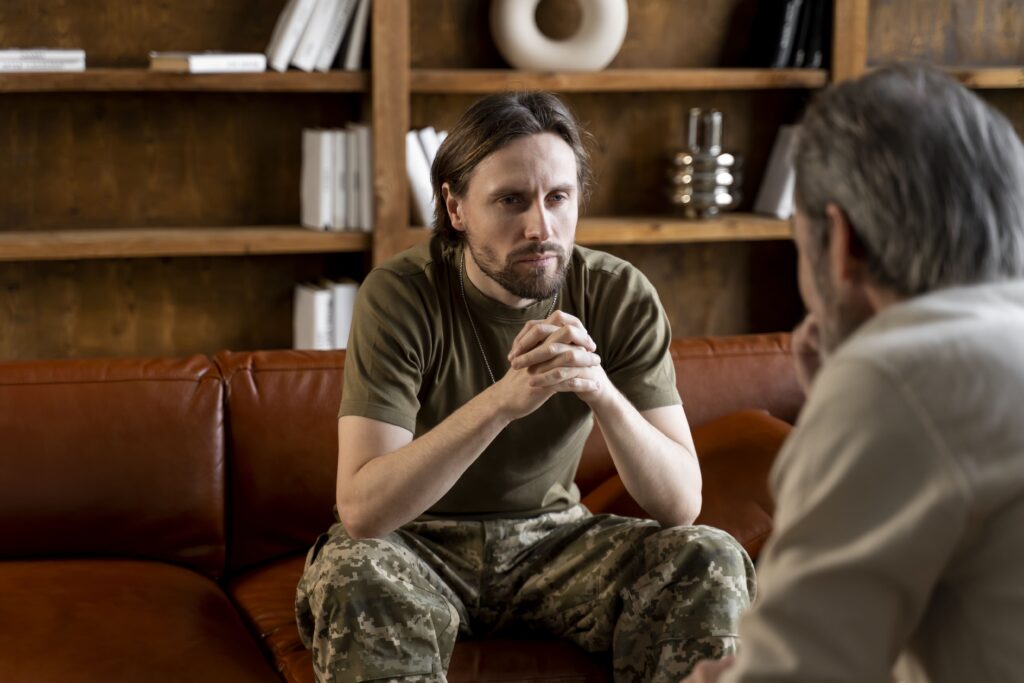
How Care Point Boston Supports Veterans
Care begins with a comprehensive clinical evaluation that focuses on how military related experiences continue to affect daily life. This process goes beyond surface symptoms and helps identify patterns of stress, regulation, and coping that may be driving ongoing distress.
Treatment is individualized and may include a combination of trauma therapy, individual therapy, group therapy, and skills-based support. Individual sessions provide focused care for anxiety, trauma related symptoms, and emotional regulation. Group therapy offers connection and shared understanding, which many veterans find reduces isolation and builds perspective.
Throughout treatment, veterans learn practical tools that support regulation and resilience in everyday life. Care is paced intentionally, with attention to safety, readiness, and long term progress rather than quick fixes.
PTSD, Anxiety, and Long Term Mental Health
Post-traumatic stress and anxiety do not always appear immediately after service. Symptoms can develop gradually and may be minimized for years, especially when daily responsibilities are still being met. Over time, untreated stress can affect physical health, emotional well-being, and personal relationships.
Veterans may notice difficulty relaxing, irritability, emotional distance, or avoidance of certain situations. These responses once served a protective purpose. With appropriate care, they can be addressed to support healing, flexibility, and renewed engagement with life.
Because military trauma is often cumulative and shaped by prolonged responsibility and alertness, we understand the need for specialized PTSD treatment for veterans that reflects the realities of service and long-term stress exposure. Care that accounts for these factors can make a meaningful difference in how symptoms are understood and treated over time.
Many veterans experience meaningful improvement with treatment, including better sleep, reduced anxiety, stronger relationships, and a greater sense of balance.
Barriers You May Face When Considering Mental Health Care
If you have made it this far, you may have considered seeking support more than once before deciding whether it is worth it. For many veterans, the hesitation is not about denying what they are experiencing. It is about how you have learned to carry responsibility, manage discomfort, and rely on yourself.
You may worry that treatment will require revisiting experiences before you feel ready, or that a clinician will not fully understand the context of military service. You may wonder whether talking about what you have managed for so long will actually help, or whether it will make things feel worse before they feel better. Practical concerns, such as balancing care with work, family, or daily responsibilities, can also make taking the first step feel overwhelming.
At Care Point Boston, these concerns are understood and respected. Treatment is collaborative and paced with intention. You are not expected to share more than you are ready to, and you are never pushed toward a process that does not feel safe or appropriate for you. Care is designed to fit into real life, not disrupt it.
By addressing these concerns directly and transparently, mental health care becomes less about forcing change and more about creating the conditions for steady, meaningful progress.

Veteran Focused Mental Health Care in Boston
Care Point Boston provides outpatient mental health services designed to fit real lives. Our Boston based team offers consistent, professional care within the community, allowing veterans to receive support while maintaining their daily responsibilities.
We are committed to creating a respectful and welcoming environment where veterans feel heard and understood. Our clinicians prioritize ethical care, ongoing training, and evidence based treatment to ensure high quality outcomes.
Taking the Next Step
Reaching out for mental health support can feel unfamiliar, especially after years of being relied upon by others. Choosing care is not a sign of weakness. It is a step toward stability, health, and long term well being. If you are a veteran or military service member seeking mental health treatment in Boston, Care Point is here to help. We invite you to contact us to schedule a confidential assessment and learn more about our services.